
Concordat Watch - Concordats by country -
Croatia
The Vatican was the first "state" to recognise Croatia. It offered this encouragement to the predominantly Catholic break-away state in 1992, shortly before Yugoslavia dissolved, while Croatia was still fighting a six-month-old war against the predominantly Eastern Orthodox, Serbian-led federal army. This early sponsorship quickly helped the Vatican truss up the new state with a bundle of concordats. A general concordat establishing a legal framework for the Church was accompanied by a second concordat, for a military vicariate, and also a third concordat, for education and culture. Two years later there followed a fourth concordat, on finance.
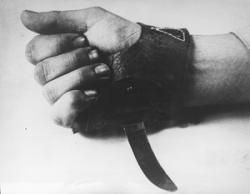
The other WWII Holocaust that Pius XII is accused of ignoring
The Croatian Holocaust is less well known than the German one. It was low-tech murder. Wooden mallets for pounding in fence posts were used to split skulls, and knives for cutting open sheaves of grain were renamed “Serbcutters” and used to slit throats. This mass murder of the Orthodox Serbs served to push to the east the historical dividing line between Roman Catholicism and Orthodoxy. Among the killers were even some Catholic Franciscan monks. In “The Vatican Role in the Ustasha Genocide in the Independent State of Croatia” Carl Savich concludes that “not only did the Vatican deny and ignore [the genocide in Croatia during WWII], but took an active part to hide and suppress it and to protect the perpetrators from prosecution and justice”.
♦ “Education and culture” (signed 19 December 1996) which provides for state subsidies for teachers in Catholic schools and Catholic catechism in state schools.
♦ “Spiritual Assistance” (signed 19 December 1996) which covers military chaplains
♦ “Financial questions” (signed 9 October 1998) which provides for the return of all Catholic Church property confiscated by the Communist regime after 1945 and for the financing of the Church tthrough the national budget.
And these are not the only pacts with the Vatican. In July 2000 the Catholic Church signed an agreement with the state-run Croatian State Radio and Television (HRT) to provide regular, extensive coverage of Catholic events (as many as 10 hours per month). Other denominations receive approximately 10 minutes broadcast time per month or less. (IRF Report, 2001)
About 85 percent of Croatians are Roman Catholic. In addition to the concordats and other agreements with the powerful Catholic Church, Croatia has agreements with the fifteen other denominations that together make up only 15 percent of the population. (IRF Report, 2010) This situation is favourable for the Vatican, because it prevents any unified opposition to concordats, as each religious splinter group tries to negotiate its own minor perks.
In April 2010 the Constitutional Court refused to rule on the constitutionality of an agreement between the government and the Vatican related to the provision of catechism in elementary and high schools. The court stated that it lacked jurisdiction in the matter since it was unable to rule on the merits of international treaties. The decision was in response to a suit filed in 2000 claiming that the agreement violated the equal rights of all citizens. The suit claimed that those who did not attend catechism were not provided with classes in either their own faith or on ethics. (IRF Report, 2010)
The Pope voiced his support for Croatia’s bid to join the European Union where this extremely conservative Catholic country may help uphold Vatican policies. Half a year before its accession date in 2013, while the Vatican still had this leverage, the Croatian Prime Minister visited the Vatican and was urged to give up a monastery property to an Italian order, rather than remaining under its Croatian diocese, whose bishop had already been removed over the matter. The Vatican appears to be trying to get direct control of valuable property, as in the dispute over the Catholic university in Peru.

- Protest against Concordat with the Vatican Held in Zagreb
A demonstration against concordats was held in Croatia in 2016, demanding abolition of Croatia’s concordats with the Vatican, claiming they cost Croatians more than a billion kuna a year (over 140 million US dollars) and violate separation of church and state.

- Lawsuit charges that Nazi gold funded Vatican ratlines
In 1999 the elderly survivors of the Croatian Holocaust launched their claim for compensation against the Franciscans and the Vatican Bank, but ten years later their claims were rejected because the American court said it lacked jurisdiction over the Vatican Bank. The Vatican Bank was further shielded by the internal Vatican monitoring body set up to prevent money laundering.

- Beatify a war criminal and get a financial concordat
Had Franjo Tudjman, the first president of Croatia, lived longer he might have been convicted of war crimes committed in the civil war of the 1990s. For politicians shunned by the world, a concordat with the Vatican means welcome acceptance and, in fact, Tudjman concluded four of them. In 1998, just before the financial concordat was signed, the Vatican sweetened the deal by beatifying an archbishop convicted as a war criminal for complicity in the WWII Croatian Holocaust.
- Agreement between The Holy See and the Republic of Croatia on Legal Questions (1996)
This concordat assures that the Church gets advance warning of any impending investigation of its clerics. In light of the atrocities perpetrated during the Croatian Holocaust (1941-45) and the Croatian War of Independence (1991-95), this may be a prudent move.


