



Italy
In 1871 Italy took over the pope's kingdom, the Papal States, and for 59 years popes maintained that they were still the rightful rulers of most of Italy. Finally, in 1929, the dictator Mussolini made an agreement with the Vatican to give it an independent enclave within the Italian state. Today the struggle is still going on between the modern Italian nation and the the “State of the Vatican City” inside it, As Elisabetta Canitano, president of Vita di Donna, a gynecologists’ organization for women’s health says, the Catholic church still “considers Italy as its country.”*
The Vatican was eager to keep the favourable terms offered by the concordat signed by Mussolini. In 1984 it managed to avoid having this concordat scrapped and instead, it was merely revised.
The next move was to have a cardinal design the law that assigns taxes to the various denominations. This eight per thousand tax, whose its proportional representation and default rules combine to give the lion's share to the Catholic Church.
Then in 2007 the Vatican headed off the attempt to introduce an omnibus religion freedom law and insisted that any other religious bodies sharing in the tax revenues be individually approved. This has the effect of restricting their number, most recently in August 2010, when the Italian parliament the voted to deny income tax revenue to Islam.
By blocking the religious freedom law the Catholic Church has managed to safeguard the huge tax payments it receives every year.
The Vatican Secretary of State objected to the publication of these groundbreaking articles, but did not dispute their accuracy. Here is the complete series specially translated from La Repubblica by Graeme A. Hunter. In response to this scandal in 2012 the European Court of Justice obliged Italy to close a loophole allowed the Vatican and religious orders to avoid property tax on commercial activities as long as the premises contained a chapel. And in 2018 it ruled that the Vatcan must pay Italy €4 billion for the unpaid taxes during the five years from 2006 to 2011.The next question is, will the Vatican actually hand over the money? To prevent the favourable concordat with Mussolini from being scrapped, in 1984 it was minimally revised. The Vatican was forced to relinquish the status of official state church, including government salaries for priests. However, a clever bishop found a way for the Church to make a profit out of this “concession”. Although the Vatican has stopped selling indulgences directly, it still profits from offering this type of penance for one’s sins. The pilgrimage for an indulgence may be booked through the Vatican’s own travel agency which offers flights with the Vatican airline and hotel accomodation in tax-exempt convents. Use the Vatican travel agency, or risk being turned away from the pope’s audiences for pilgrims. The European Court of Human Rights (ECHR) has loosened the application of human rights by taking into account the customs of the country, a principle called the “margin of appreciation”. Under heavy pressure it allowed Italy to uphold its Catholic traditions in public schools and four years later permitted France to maintain its secular tradition in public spaces. A former ECHR judge comments on what he calls the Court's increasing "timidity". Mussolini's boasted that the Lateran Treaty would “bury” the worldly power of the pope, but it permitted just the opposite, even serving as a springboard to vault the Church into international bodies. And as a comedienne discovered in 2008, this Treaty still threatens Italians with five years in prison for a joke about the Pope. This excerpt from the acclaimed work by T.H. Koon, Believe, obey, fight, looks at the negotiations for the 1929 concordat. Through concessions to the Vatican “Mussolini received a kind of moral recognition that the Pope's predecessors had always denied to liberal governments.” Mussolini is long gone, but his concordat lives on, as it has been revised but never revoked. Pius XI summed it up as: “God to Italy and Italy to God” “The Lateran Treaty [...] settled the ‘Roman Question’, the conflict between the papacy and the kingdom of Italy (1861-1929). The treaty recognized the Holy See’s absolute, visible independence and sovereignty with the right of international and diplomatic relations with other states.” — Msgr. Pedro Lopez-Gallo The pope's 58-year boycott of Italy achieved its aim when Mussolini gave the Vatican not only a country and a concordat, but also the huge payment promised here. This has been used to fund a secret property empire. Much of this concordat between Pope Pius XI and the dictator Mussolini was retained in the post-Fascist amended version of 1984. Thus it still largely determines the role of the Catholic Church within the Italian state today. Rather than lose the favourable Lateran Pacts, the Vatican let them be revised to remove mention of a state religion (in the Supplementary Protocol to Article 1). Catholic religious instruction in the schools thus became no longer compulsory, and the number of pupils opting out climbed slowly until by 2022 it reached 14%.[1] However, the Church has continued to shelter under this concordat. In May 2012 the Italian Bishops' Conference (CEI) said in its child protection guidelines that under Articles 2.1 and 4.4 of this concordat its priests have no obligation to report suspected abuse to the police.[2] And twenty years later the head of an umbrella group of those who had suffered clerical abuse estimated that this concordat had enabled Italian clergy to assault up to a million victims.[3]
Church, state and money: How Italy subsidises the Vatican (2007-2018)

Profitable way to stop being state church: the 1984 concordat modifications
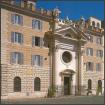
Indulgences meet tax exemptions: Fly with us to purge your sins
“Margin of appreciation” permits crucifixes in Italian state schools (2011), a niqab ban in France (2014) and a general erosion of human rights.
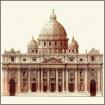
How the Lateran Treaty made the Catholic Church into a state
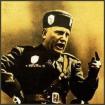
Concordat negotiations with Mussolini: “God to Italy and Italy to God”

Lateran Conciliation Treaty (1929): text

Lateran Financial Convention (1929): text

Lateran Concordat (1929): text

Modifications to the Lateran Concordat (1984): text
* Rosie Scammel, "Driving Women around the Bend: What’s Really Going on with Abortion Access in Italy?" Conscience, Catholics for Choice, 22 August 2016. http://consciencemag.org/2016/08/22/driving-women-around-the-bend-whats-really-going-on-with-abortion-access-in-italy/
See also: "On Paper, Italy Allows Abortions, but Few Doctors Will Perform Them" https://www.nytimes.com/2016/01/17/world/europe/on-paper-italy-allows-abortions-but-few-doctors-will-perform-them.html


