



 The left gets a modus vivendi, the right a concordat
The Vatican makes concordats with rightwing governments, both absolute monarchies and fascist dictatorships. However, officially it snubs equally authoritarian governments on the left, since their regimes competed with the Church ideologically, rather than complementing it. But in order to slavage as much influence as possible, the Vatican made quiet working arrangements with communist countries.
Ordination of priests at St. Peter's in Rome. Dictators
also want to keep people humble and rightwing ones have
traditionally allied themselves with the Church through concordats.
The Church teaches a deference to authority which makes it a natural ally with authoritarian governments (the ones, that is, that are not ideologicaly opposed to religion.) A woman who had quietly submitted to sexual abuse as a child explained that “I knew from my catechism book that following the wishes of authority figures was a way of 'showing God how much we love him. We show this especially when we obey in something we do not feel like doing.'” [1]
Official relations with the right
A dissident 17th-century French priest describes the pact between the Church and the King of France – but he could just as well have been talking about the Vatican's arrangements with later authoritarian rulers of France like the Emperor Napoléon or the Nazi puppet, Marshal Pétain:
Religion supports political power [...] and the government, in return, protects religion.[...] On the one side, the priests command on pain of curses and eternal damnation obedience to the magistrates, princes and kings, as established by God to govern the rest, and on the other side, the princes ensure that the priests are respected and granted good appointments and good revenues.... [2]
Few seem to have the moral qualms of the brave Archbishop of Cologne, Kardinal Joseph Schulte, who viewed with dismay the Vatican's pact with Hitler: “One can't make a concordat with a dictatorship.” [3]
Unfortunately, this is not the Vatican view. An authoritarian ruler can offer more favourable terms for a concordat than would be likely in a democracy. As a Vatican legal expert admits:
The Apostolic See, to avoid the risk of open mockery, usually enters into solemn undertakings only where a civil government is under no obligation to seek the consent of a representative body, or where there can be no reasonable doubt that such consent will be granted. [4]
This was the inside view from a famed canonist at the Gregorian University in Rome who became superior general of the Jesuits and a trusted adviser to Pope Pius X.
It's much easier to sign a concordat with a dictator, for then there's no worry that a democratic legislature might refuse to ratify it. This is why concordats are so often made with strongmen, like the 19th-century dictators of Ecuador, Moreno and Veintimilla. In the 20th century this continued and Concordat Watch contains texts of concordats made with the following despots
Hitler (Germany)
Mussolini (Italy)
Franco (Spain)
The Duvaliers (Haiti)
Trujillo (Dominican Republic)
Dollfuss (Austria)
Houphouët-Boigny (Côte d'Ivoire)
Aramburu and Onganía (Argentina)
Bermúdez (Peru, just two days before he had to step down).
The first five gentlemen even made it into the Killers of the 20th Century.
These rightwing dictators generally got on well with the Vatican, despite occasional theoretical differences. For instance, regarding the Jews, the Church was anti-Jewish, blaming the Jews for communism, democracy and "killing Christ", while the Nazis were anti-Semitic, blaming them for ancestry that wasn't German. When it came to the crunch, this subtle distinction about exactly what they should be accused of didn't help most Jews very much. [5] In practice, it just meant that a few of the Jews who had converted to Catholicism were saved through Church intervention, while the rest were left to their fate under Hitler.
 This marriage between fascism and religions has been called clero-fascism or clerical fascism. More about this can be found at the site of the Clero-Fascist Studies Project.
Vatican support for rightwing dictators did not end when fascism disappeared from Europe.
While John Paul II draped his interventions in Poland and Eastern Europe in the garb of “liberty” and “independence,” the reactionary essence of his political orientation was revealed openly in South America. There he sided with the ruling elites and disciplined so-called “liberation theologians” who had lined up with the oppressed in their struggles against right-wing military dictatorships. [6]
In this John Paul II was only continuing the support of his predecessors for bloody rightwing dictators. The attempts by Paul IV to whitewash the terror in Chile are even revealed in a secret US diplomatic cable from 1973, more than a month after Pinochet's coup. It reports the message of Archbishop Benelli who was the Pope's right-hand man. (Benelli, though officially the Deputy Vatican Secretary of State was doing the whole job, as his superior was by then very old.) He told the Americans that, “As is unfortunately natural following coup d'état, there has admittedly been bloodshed during mopping up procedures in Chile.” But Benelli went on to say that Chilean bishops had assured him “that stories alleging brutal reprisals in international media are unfounded” and dismissed them as “Communist propaganda”. [7]
However, any alliance with the Vatican remains a marriage of convenience, one which is promptly annulled when support for the dictator threatens to become a liability. Thus the standard sequence is for the Vatican to conclude a concordat with a dictator who is anxious for the legitimacy conferred by a concordat with the Holy See. Yet when his hold on power slips and it's clear he's soon going to be to be replaced by popular demand, the Church turns on him. To get more leverage with the future democratic government and be seen as supporting the oppressed, the Church switches sides. It suddenly remembers the dictaor's atrocities and issues grave warnings from pulpits across the land. This happened in their declining days to Spain's Franco, Haiti's Duvalier, the Dominican Republic's Trujillo, Argentina's Juan Peron, Venezuela's Marcos Perez Jimenez and Colombia's Gustavo Rojas Pinilla. [8] Of course, when the Vatican turns on its concordat partners it does not renounce the concordats, as well. Long after the rightwing dictators have been deposed, these remain.
Unofficial relations with the left
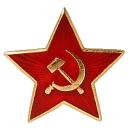 With leftwing dictatorships the relationship is less cosy. The Church opposed Socialism and Communism from very early on, long before the Soviets came to power and began abusing people. [9] This fact suggests that the Church objected to Marxism, not because it was against oppression, but because it wanted to check any competing ideology, especially one which was hostile to religion.
However, this did not prevent widespread collaboration of priests with the Communist secret services. In Poland, for example, it's been estimated that up to 15 percent of the priesthood, including many bishops, cooperated with the state, after yielding to threats and temptations. [10]
The Vatican also compromised, by entering agreements that it didn't call concordats. Whenever it has to find out what was going on and exercise what influence it could, it arranged a modus vivendi — a working agreement — with the various Communist regimes of Eastern Europe. This was a kind of diplomatic note lacking the full force of an international treaty, (which is what a concordat purports to be). The modus vivendi acted to secure whatever could be got, it kept the lines of communication open and yet it withheld the diplomatic recognition conferred by a concordat. The modus vivendi was intended as a stopgap until a leftwing regime collapsed. Then the Vatican could offer a new and more compliant successor the prospect of international recognition and the stabilising support of the Church — at a price — the price of a concordat.
And the world's largest communist country can expect to get more concessions than others from the Vatican. At stake the chance to missionise a fifth of the world's population which has been largely beyond ithe Vatican's reach. As of 2018 the diplomatic dance was continuing.
Notes
Note on the picture of boots: These seem a better symbol of modern Fascism than the traditional "fasces". Springer boots, originally for paratroopers, have thick soles to absorb the shock of landing. Neo-Nazis use them to absorb the shock to their feet of treading on their victims.
1. Patricia McCormick, "What Father Bradel Did to Me", New York Times, 2018-08-18. https://www.nytimes.com/2018/08/18/opinion/sunday/victim-church-abuse-pennsylvania.html
2. Jean Meslier (1664-1729), Mémoire contre la religion. (The original title was: Mémoire des pensées et des sentiments de Jean Meslier, prêtre, curé d’Étrépigny et de Balaives, sur une partie des erreurs et des abus de la conduite et du gouvernement des hommes où l’on voit des démonstrations claires et évidentes de la vanité et de la fausseté de toutes les divinités et de toutes les religions du monde pour être adressé à ses paroissiens après sa mort, et pour leur servir de témoignage de vérité à eux, et à tous leurs semblables.)
3. "Vatikan und NS-Regierung Nichts hören, nichts sehen, vertragen", Spiegel, 2013-07-18. http://www.spiegel.de/einestages/80-jahre-reichskonkordat-pakt-zwischen-vatikan-und-ns-regierung-a-951201.html
4. Francis Xavier Wernz, SJ, Jus Decretalium I, 166, (Rome, 1905). http://www.catholic.org/encyclopedia/view.php?id=3230
5. Muriel Fraser, "Vatican anti-Judaism versus Nazi anti-Semitism: a subtle theological distinction", Concordat Watch, 2006-07-21.
6. Marius Heuser and Peter Schwarz, "Pope John Paul II: a political obituary", World Socialist Web Site, 2005-04-06. http://www.wsws.org/articles/2005/apr2005/pope-a06.shtml The article continues:
In the course of his first visit to Nicaragua in 1983, John Paul II publicly reprimanded the priest Ernesto Cardenal who, together with two other priests, held ministerial posts in the Sandinista government. In 1995, during another visit to Nicaragua, the pope condemned the Iglesia Popular (People’s Church) and what he called the mistaken ecumenism “of Christians engaged in the revolutionary process.” At the same time, he elevated the right-wing archbishop and bitter opponent of the Sandinistas, Miguel Obando y Bravo, to the post of cardinal.
Numerous liberation theologians were sacked from their posts by John Paul II and replaced by conservative bishops or priests. Writes François Houtard in Le Monde Diplomatique: “Grass roots church groups which had come into being in South America characterised by autonomy and the protection of the interests of the poor were isolated and even destroyed in some cases. Priests who sided with them were removed and forbidden access to community facilities, and occasionally new groups were set up under the same name...”
At the same time, supporters of right-wing dictatorships ascended to the highest offices of the Church. The papal nuncio to the Argentine military dictatorship, Pio Laghi, and the nuncio to the Chilean military dictatorship, Angelo Sodano, are today both cardinals.
Sodano had praised Pinochet’s despotic and murderous rule in Chile with the words: “Masterpieces can also have small errors. I would advise you not to dwell on the errors of the painting, but concentrate on the marvellous general impression.” When an arrest warrant for Pinochet was issued in 1998 while the former dictator was in London, the pope himself publicly supported the Chilean fascist general.
7. "Highest level Vatican concern over propaganda on Chile", 1973-10-18. US Department of State, ID: 1973ROME11385_b
https://www.wikileaks.org/plusd/cables/1973ROME11385_b.html 5.
8. "Bishops' Warning", Time, 1960-02-15.
9. David Ranan, Double Cross: The Code of the Catholic Church, (Theo Press, 2000), p. 18.
10. "An End to the Lies: The Polish Church's Secret Past", Spiegel, 2007-01-16 http://www.spiegel.de/international/spiegel/an-end-to-the-lies-the-polish-church-s-secret-past-a-459791.html

